
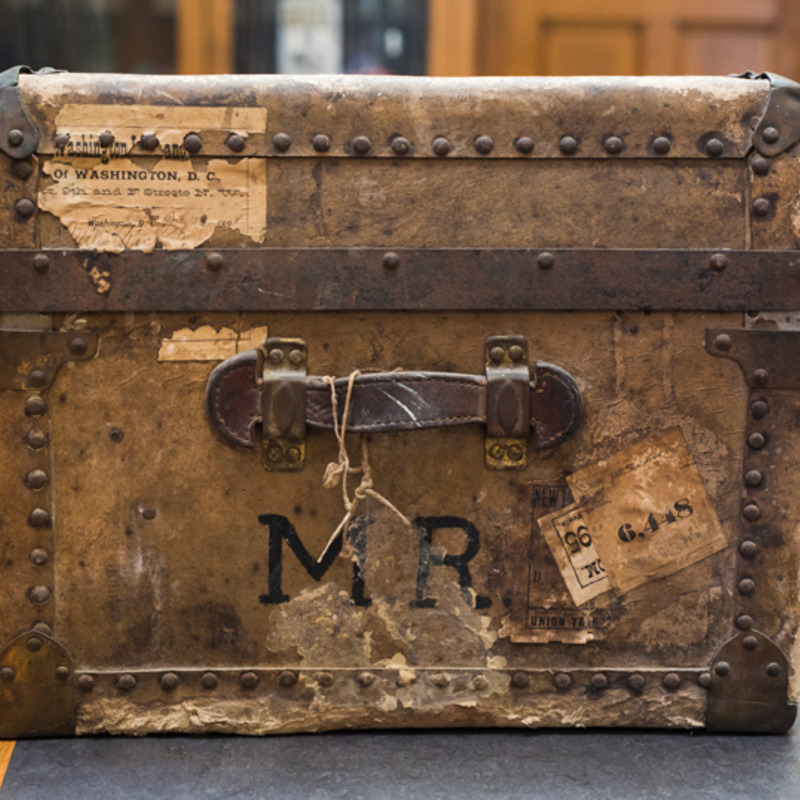
inventory_2Collection Guide
Search the Miles Rock Papers
The entirety of the Miles Rock Papers have been inventoried and described to improve user access. Using the collection's archival finding aid, you can browse items by topic and see groupings of related materials. The finding aid can be search using keywords to reveal the location of items related to specific people, places, events, or subjects.
If you find material that you are interested in viewing digitally or in person, you can reach out to the Special Collections team to arrange access.
museumExhibtion
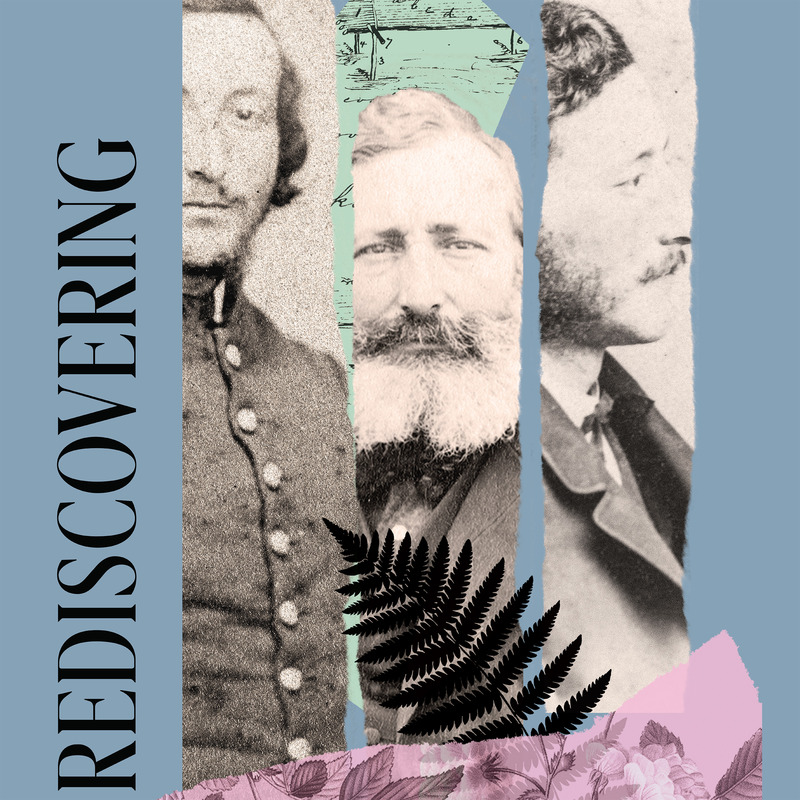
Rediscovering Miles Rock
Originally on display in Linderman and E.W. Fairchild-Martindale Libraries in 2024, this exhibit explores Miles Rock's legacy through curated selections from his archival papers. Beginning with his early life and education, the exhibit tracks Rock through his Civil War service to Lehigh University, where he became one of the institution's first five graduates. The exhibit also focuses on Rock's professional life as an astronomer in Argentina, a surveyor for the U.S. government, and ultimately as the commissioner of the Guatemala Boundary Commission. Following his work mapping the Guatemala-Mexico border, the exhibit addresses Rock's operation of a coffee farm and the reaction to his death in 1901.
This exhibit continues to be accessible through the Lehigh Libraries exhibition platform, where high resolution images of every featured item can be viewed online.
Digitized Materials
Access and download items from the Miles Rock Papers.
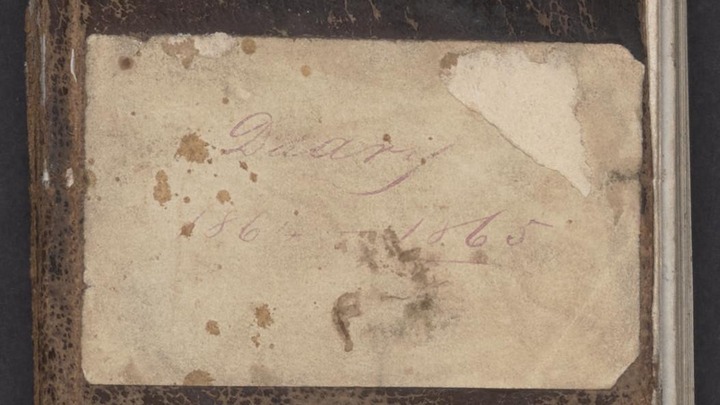
Diaries and Notebooks
Rock's earliest diaries begin with the U.S. Civil War in 1861 and extend through 1900. Included are daily recollections of serving in the Army, working in the Lehigh Valley, travelling across the United States for the U.S. Geological Survey and ultimately working on the Guatemalan Border Commission.
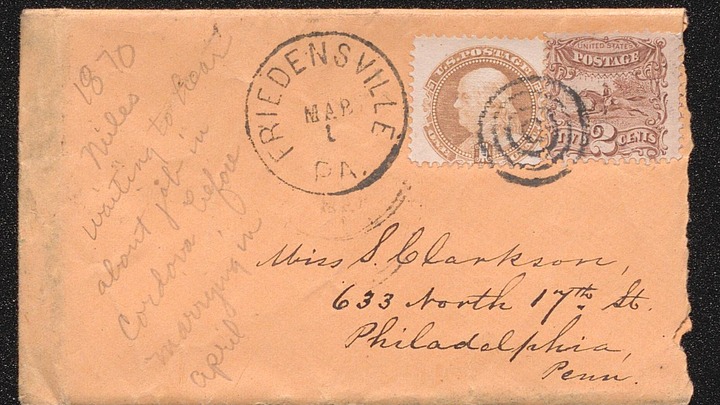
Correspondence
Miles Rock carefully collection the mail and correspondence that he received over his life. Included in this collection are letters and other written communications sent to Rock by his family and professional acquaintances.
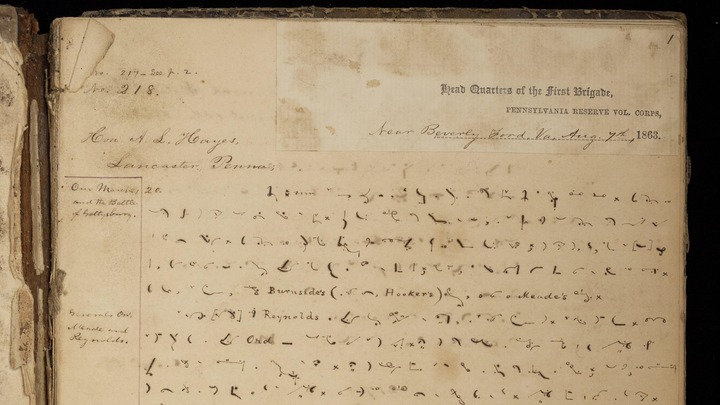
Letter Copy Books
In addition to saving correspondences that he received, Miles Rock also diligently tracked and copied the letters that he sent. The copy books help provide a complete picture of outgoing communication from Miles Rock.
Storymap and Timeline Visualizations
Explore the life of Miles Rock through innovative visualizations that track his accomplishments across time and space.
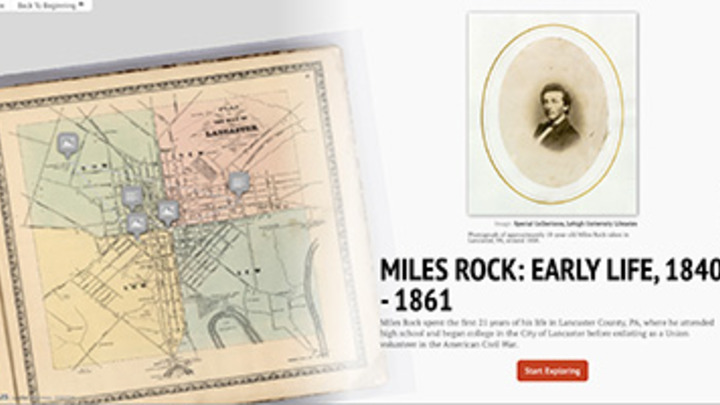
Early Life
Miles Rock spent the first 21 years of his life in Lancaster County, PA, where he attended high school and began college in the City of Lancaster before enlisting as a Union volunteer in the American Civil War.
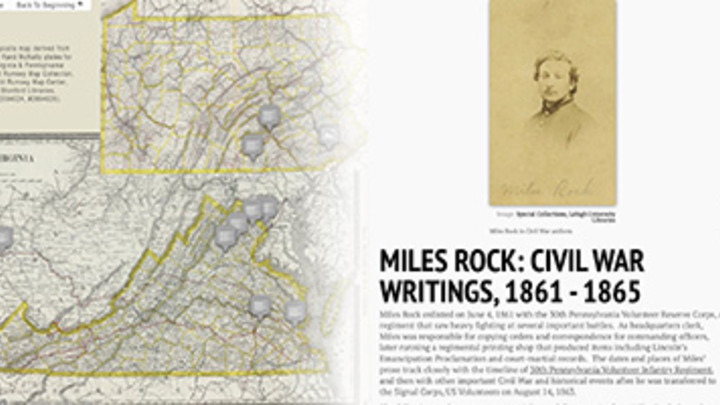
Civil War
Miles Rock enlisted on June 4, 1861 with the 30th Pennsylvania Volunteer Reserve Corps, and was assigned to a regiment that saw fighting at several important battles. This visualization follows letters, excerpts, articles, and diary entries that Miles Rock wrote throughout his Civil War experience.
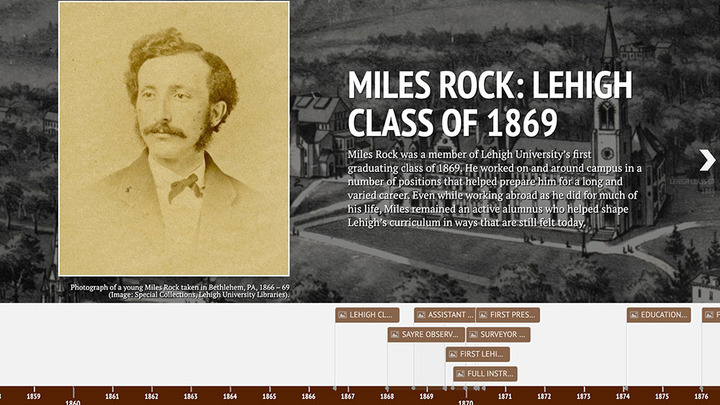
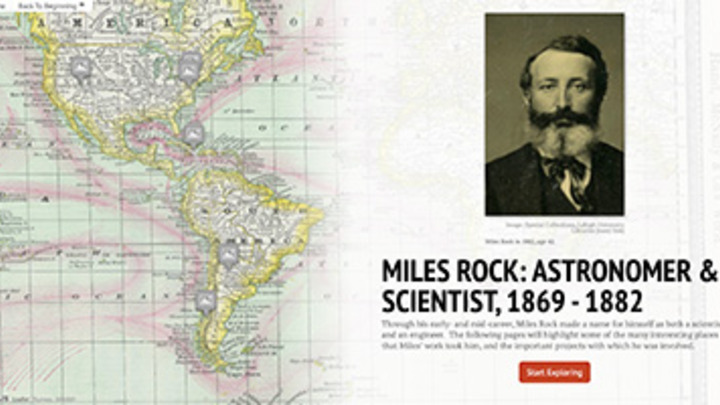
Astronomer and Scientist
Through his early- and mid-career, Miles Rock made a name for himself as both a scientist and an engineer. The following pages will highlight some of the many interesting places that Miles' work took him, and the important projects with which he was involved.
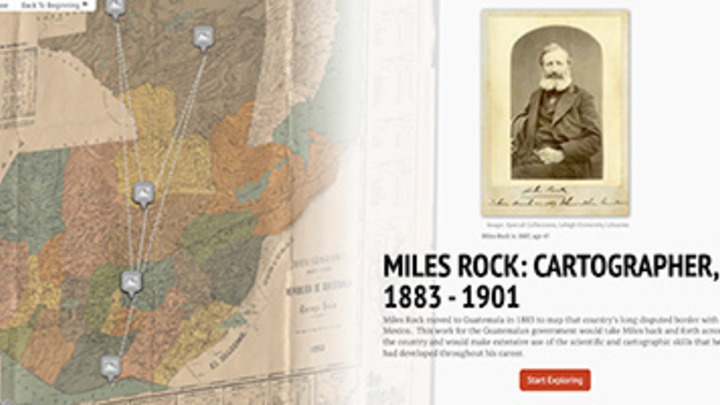
Cartographer
Miles Rock moved to Guatemala in 1883 to map that country's long disputed border with Mexico. His work for the Guatemalan government took Miles back and forth across that country and made extensive use of scientific and cartographic skills developed throughout his earlier career.
Articles
Read more about the Miles Rock Papers including how they arrived at Lehigh and how they are being used by scholarly researchers.
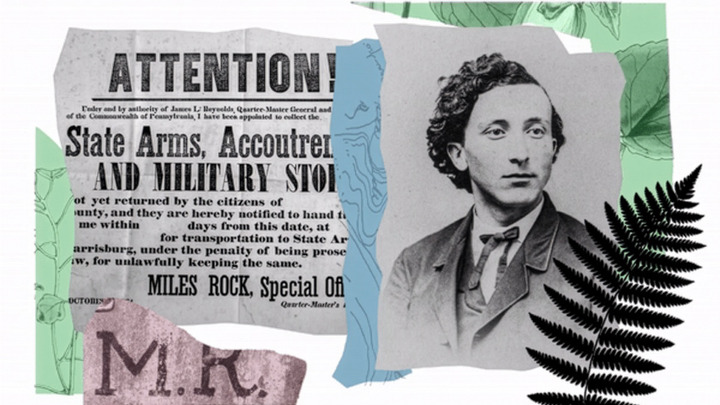
Alumni Bulletin
Rediscovering Miles Rock
A gift to Lehigh Libraries Special Collections creates a snapshot of one of Lehigh’s first graduates—a naturalist, civil engineer and astronomer—and offers new research opportunities.
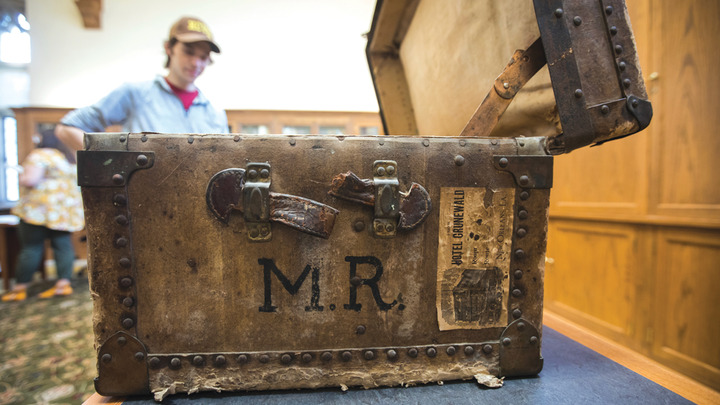
Alumni Bulletin
A Quintessential Lehigh Story
A letter from Bulletin Editor Mary Ellen Alu.
College of Arts and Sciences
Examining the Remarkable Life of Miles Rock
Ph.D. student Casey Kies hopes to cement one of Lehigh’s first graduates in history.
Videos
Watch videos about the Miles Rock Papers featuring individual items of interest and a panel discussion on the collection.
The Miles Rock Collection at Lehigh University
0:00
(upbeat music)
0:03
- The material arrived to us in five trunks.
0:08
It's surprising to see trunks from the 19th century
0:14
that contained the correspondence
0:16
that we began to unpack with assistance from our,
0:20
our generous donors,
0:22
the great great grandsons of Miles Rock.
0:25
(upbeat music continues)
0:27
Miles Rock was one of the members
0:30
of the first graduating class at Lehigh,
0:32
the first student in fact to receive
0:34
a civil engineering degree in 1869.
0:37
And this is just an amazing collection
0:40
with so much research potential.
0:42
It includes his diaries,
0:44
it includes photographs
0:46
and perhaps most interesting is his Civil War uniform.
0:52
- I think that for many years
0:54
this is gonna be serving our community,
0:58
critically to assess, you know
1:00
how people were living at that time.
1:02
And also thinking about the organization
1:04
and Lehigh as a university.
1:06
- This is actually a once in a lifetime opportunity
1:09
to see a collection that is this comprehensive.
1:12
It tells us such an interesting story
1:15
how a young boy from Lancaster County
1:18
can go on to not only serve his country
1:22
but then also receive a college degree,
1:25
writing a thesis on civil engineering,
1:28
mapping zinc mines and then graduating
1:34
with an assignment as a Lehigh faculty member.
1:37
He taught civil engineering here at Lehigh for a year
1:40
before moving to Argentina.
1:43
He is in effect, the typical Lehigh student.
1:48
- [Boaz] There are so many things we can do
1:49
because this is such a rich collection
1:52
where many times research shows up from
1:56
not familiar avenues.
1:58
And there are things that we gonna be doing
2:00
in collaboration with many other faculty members.
2:03
All of it is gonna be a venue for research in the future.
2:08
(upbeat music continues)
Rediscovering Miles Rock Presentation and Panel Discussion
0:14
thank you okay so hello everybody this is so exciting we are finally here together to celebrate the Life and
0:21
Legacy uh of ma Rock we're so excited all of you are here it's almost like a family reunion uh I know that there are
0:29
lots of people that are in other places as well you traveled far you got here
0:34
we're so excited about you all being here thank you uh so we have a little bit of kind of a plan for the day but
0:41
there's going to be a lot of kind of informal conversation we hope um we're starting with around 40 minutes or so of
0:48
us talking about things things we like things we appreciate things we'd like to explore uh around the collection and
0:56
then there's going to be a panel discussion and you got all those amazing people people around the table to kind
1:01
of lead us into you know the discussion there uh so uh we also record uh
1:07
everything today so we picked up this room especially to make sure that what we're saying today is available for
1:14
people that are not able to join us or other people that want to just kind of enjoy what we're talking about later uh
1:21
and uh thank you all for coming this is great so I have a few words myself I'm
1:27
Boaz nadav manes I'm the University libr librarian in Lehi University Library um
1:33
and I wanted to say dear friends colleagues and guests uh de uh Chris and
1:38
David Grace uh descendants of ma Rock uh the family your loved ones uh we are
1:46
honored to have you all here with us today to celebrate the life of ma Rock the person and his
1:53
legacy uh to our guests who came from near and far welcome to the Lei Valley
1:59
uh to Bethlehem and to Leah University this is the place that Miles
2:04
Rock loved so much so we are really honored that you're all here today um in
2:10
February 8th uh 1862 in the middle of the Civil War ma
2:16
Rock wrote to his brother Edward rock you hope the war will soon be over
2:22
and we will see each other I have very strong doubts about it being over for a
2:27
year however when it is over and I live I shall rejoice to come to Bethlehem and
2:35
botanize over the beautiful hills around Lehi we invite you all uh in the coming
2:43
days to follow M's advice rejoice and botanize exploring this beautiful campus
2:49
and its surroundings uh as the university librarian in in Lehi when such an
2:55
opportunity arise uh and the decision needs to be made if we accept a donation
3:00
of such a scale uh we often hope and sometimes pray uh that what seems to be
3:07
a golden opportunity for us to reconnect with our past to the benefit of our future will be a wholesome
3:14
experience such that will allow us to learn about the past but also confirm
3:19
and sometimes challenge our current beliefs and deeds and strengthen of values going forward honestly you never
3:27
know until you see the collection the past is indeed complicated and so is
3:33
our present alignment between the undying urge of research libraries like ours to
3:40
preserve and protect legacies stories and motivations often conflicts with
3:45
other values very dear to us and communities we serve still we choose to
3:51
collect anyway this is what Librarians are all about we are here to provide authentic and accurate
3:57
information uh freely to anyone who likes to learn explore and grow no
4:03
matter what their orientation of views are even when past stories are difficult
4:08
to understand or agree with in the past year and a half and since Lois and I first connected with
4:15
Chris and David Graves and as our librarian staff faculty and students
4:20
began to immerse themselves in the miles rock collection many of us became real fans of the person and his
4:27
legacy you see us all growing beards and like having shirts with birds and and
4:34
everything and we we look like him more and more uh uh beyond the facts about his Global
4:41
exploration and his success in becoming a self-made man starting from humble beginnings we learned much about his
4:47
inner thoughts his curiosity about Science and Arts and his interest in advancing causes of social justice work
4:54
and racial Equity as well as his deep and Rich connections to his friends family and to Lehi we are proud with his
5:02
legacy David said to us we were really hopeful we would find a place where it wouldn't get lost in a larger collection
5:10
or some remote collection where no one knew about it Chris said the I was a
5:16
natural first choice We believe that you made the excellent
5:22
choice uh Lei 2023 strategic plan inspiring the future of makers outlines
5:28
free goals make it new we lead with curiosity make it different applying new
5:34
knowledge to existing problems and make it together connecting with our communities and partners while
5:41
approaching the world with humility and desire to serve and care for value and
5:46
and care for and value each other in my my mind this goes written just recently
5:52
with an eye towards the future are echoed and exemplified again and again by the ma Rock story and is
6:00
I think he would be very much approving how this institution intends to March forward I'm so excited that you're all
6:07
here today join to join us to learn more about the man and his legacy of course there are many people
6:15
to thank for the events and activities leading to today I would like to first and foremost thank our amazing wonderful
6:21
special collections team here uh at Le for the Deep engagement with the collection this far and making it
6:28
accessible to Future Generations if you're in special collections raise your
6:35
hand thank
6:41
you um also to the faculty and students who already partnered with us to explore new
6:48
research directions and interests we have two of them here and we're very very excited about you know them talking
6:53
about what they want to do with the collection they're already working on it this is amazing you know like we have it for a year and a half by now and it's so
7:01
cool to see work done already and kind of thinking what is the collection uh in
7:06
in terms of present uh also to our Librarians and staff in the library and
7:12
Technology services for putting all the events here together uh and to our University
7:18
communication folks Alumni Association and the advancement office for the sheer
7:24
excitement expertise and support all around about this unbelievable gift we
7:29
acknowledge today last I want to thank the friends of the Lea University Library members
7:35
and the board for ongoing strong support your help make us make sure that our
7:41
libraries can continue to create preserve and share the wealth of knowledge produced by this
7:47
community I want to introduce now our next speaker and partner in crime Lis
7:52
black uh who has been in Lehi since 2006 where she currently serves as the
7:58
Director of liary special collections she brings rare book and manuscript experience from private public and
8:04
independent institutional libraries to Lehi to say a few words and introduce our speakers today thank thank
8:12
[Applause]
8:22
you good afternoon please allow me to begin by
8:28
echoing boaz's words of gratitude and thanking the friends of the Lehi libraries we appreciate their
8:34
sponsorship of this exciting series of events commemorating the life of Miles rock this program and ensuing research
8:42
opportunities wouldn't have been possible without generations of Miles Rock's descendants having had the
8:48
foresight to preserve his papers and memorabilia largely intacted preventing his story from being lost to the passage
8:55
of time and what a story it is let me Begin by describing this generous gift
9:01
of Chris Grace and David Grace great great grandsons of Miles Rock they were the most recent
9:08
custodians of rocks papers prior to Their donation and the archive to the Lehi libraries special
9:15
collections David and Chris contacted the Lehi Library special Collections and
9:20
described over Zoom we remember those days but Zoom the most amazing
9:25
historical collection Lehi archist could imagine the papers of a member of the
9:30
first graduating class in
9:39
1869 the brothers generously offered to bring the collection to Lehi making the trip respectively from Massachusetts and
9:47
Wisconsin Chris and David regaled my colleagues and I with stories that had been passed down from generation to
9:55
generation we learned about the fascinating life of Miles Rock who much like today's students pursued an
10:00
education and subsequently a career that took him around the globe we learned firsthand through
10:07
photographs journals and correspondence the story of Miles Rock the only Lehi student who have served in the American
10:14
Civil War the earliest material dates from his childhood in Lancaster
10:21
Pennsylvania and his studies at Franklin and Marshall College his enlistment in the Civil War and enrollment at Lehi
10:28
University also documented are his professional Pursuits beginning with lehi's hiring him as an instructor a
10:35
survey of a local zinc mine and work as an astronomer in
10:40
Argentina miles Rock's most famous most significant professional accomplishment
10:46
was delineating the border between Mexico and Guatemala he died on his coffee
10:52
plantation in Guatemala in 1901 we've learned more about about
10:59
miles rock thanks to generous support provided by Chris and David that enabled special
11:05
collections to expedite cataloging of the archive Casey keys and Casey is here
11:12
today a PhD student in the department of History was hired to serve as a project
11:18
archist through the course of this work Casey made a number of interesting discoveries that he'll share with you
11:24
shortly Casey also served as guest curator of the current exhibit on display in
11:32
lehi's historic Linderman library and online re rediscovering miles rock
11:38
thanks to Chris's and David's support the exhibit includes Maps drawn
11:43
by Miles Rock letters written between his family members and examples of miles's work as both an astronomer and
11:52
surveyor I hope you'll have a chance to visit and walk in the footsteps of Miles Rock the exhibit is on display through
12:01
campus through early July and I know many folks in this room have had a
12:06
chance to uh preview the exhibit you've seen portions of it in the main and
12:12
third floor of Linderman Library uh if you join us at the reception following
12:17
you'll have a chance to see material that's exhibited in the cafe Gallery as well I'd also like to take this
12:24
opportunity to describe some of the teaching and learning opportunities students have had with Miles rock
12:30
collection during the past year special collections has presented classes such as World stories fictional
12:38
expressions of globalization for the modern languages and literatures department and power and
12:43
the planet for the international relations department students utilize the exhibit and then interact with
12:50
primary source materials from the collection in our reading
12:55
room the miles rock collection is one of the most significant archives to have
13:01
been received by Lehi University in the last century telling firsthand the story of a
13:06
member of the first graduating class consisting of only five students at that time this collection provides current
13:13
Lehi students with a measurable opportunities for experiential learning the library special collections
13:19
is hoping to undertake a number of initiatives during the course of deeper investigation of the miles Rock archive
13:25
including potentially conservation treatment of selected portions of the
13:30
collection enhanced cataloging of the papers to ensure discoverability and Aid researchers in understanding aspects of
13:37
Miles Rock's Ambitions and life digitization of the collection to
13:42
facilitate access to researchers and lifelong Learners around the globe uh potentially new acquisitions of
13:50
related materials such as photographs of Argentina Guatemala and other locals
13:56
Central to the story of Miles Rock public program and events designed to educate students faculty in the
14:02
community about miles Rock and um potentially the creation of a student internship or Fellowship to
14:08
perform some of the aforementioned tasks I'm now pleased to welcome great
14:14
great grandson of Miles Rock Chris Grace and David grace to the
14:19
podium after they each provide insight into their experience growing up with Miles
14:25
Rock PhD student Casey keys will share his reac ction to the archives and
14:31
highlight some of the discoveries he made along the way Casey will also describe the process of selecting
14:37
material for the exhibit rediscovering miles Rock the archive is extensive and
14:43
the exhibit has limited space finally Devin Finn visiting assistant professor in international
14:50
relations will describe the research opportunity she's anticipating as she delves into the
14:56
collection so I'll welcome Chris now to the
15:03
podium thank
15:09
you I'll be brief because I don't have I'm not a librarian and I'm not a
15:15
historian um so we'll leave that to The Experts um the one thing I wanted to
15:21
remind everybody or at least to tell the uninitiated even though so many are
15:26
familiar faces here um is to remind you of how how unlikely it is that these
15:34
things actually survived at all they made it from remote remote Guatemala in
15:43
1901 um back somehow through a must have
15:48
been a securious route at least probably to New Orleans or Philadelphia or
15:54
someplace um eventually landed in Washington in the family home of on Belmont Avenue or Street Street in
16:04
DC that's right and at some point they moved from
16:11
what must have been either the basement or the attic there because nobody would want to live with all of this stuff in
16:17
the middle of their home moved out to Leonville Maryland and they lived in a
16:23
barn for a while quite a while some of them were in the Attic but other stuff was in the barn
16:29
and then they moved to Trumansburg I mean it's just like this except for DC everything else is just a pinpoint on
16:37
the map at best and um there were there was there were no floods there were no
16:42
fires there was no mold to speak of there were no Vermin there were no I
16:49
mean there's very very little uh that got to these things so
16:55
that's all dumb luck none of us that was not by anybody's design because nobody was stewarding these things they were
17:02
just they were tolerating them at best and and and and the family had enough
17:08
appreciation there was enough understanding vague understanding you know as time went on of of his
17:15
significance that people thought well we're not at least we're not going to just ship them off to the dump or burn
17:21
it we'll just we've got space put it in the barn and um so David and I realized
17:30
that our children have the CH very small chance of ever having space to hold this stuff
17:38
let alone interest so we needed to stop this cycle and um and make the logical
17:45
step to really preserve them so that's um that's what I would add is just to
17:51
remember when you're looking at this stuff it it's it's it's lived a Charmed
17:57
existence in the sense that it did didn't that the normal course of events
18:02
didn't happen they didn't things these really fragile things did not get
18:07
destroyed um so that's the good news um that's that's my point so I'm gonna
18:16
hand it over to [Applause]
18:26
David I should I should start with with an admission I'm a materialist not not in the the sense of wanting to collect
18:33
money but I collect other things I I love objects I'm trained as a historian
18:39
and material culture is is my passion
18:44
and the my relationship with the with Miles Rock was always through the objects at my grandparents house walk in
18:53
and there was Furniture Cutlery um China
18:58
uh uh oil painting of my of Miles Rock's mother um these are all just everyday
19:04
objects in the house um miles Rock's mother's dowy chest was was a family
19:10
heirloom um his parents fractur uh the the Pennsylvania Dutch artwork
19:17
celebrating their marriage always on the wall if you look at family portraits or family pictures from a family those are
19:23
always in the background there always little objects that that connected us to Miles Rock so it was something
19:30
I to me it was this is material roots of of our family who we were who where we
19:36
came from just reminded you know the reminders everywhere you looked in the house and they were all connected with
19:42
my grandmother it was all her family inside the house outside the barns the cows chickens those were all my
19:49
grandfather's realm that was that was the fry family the the the ransoms and the Rocks were in
19:56
indoors and and in college when I went through I I
20:04
had the privilege of going through the chests when they came to Trumansburg the first time at about gu my junior or
20:11
senior year in college and I was looking for a topic I'd been nominated to to write an honors thesis at
20:17
Wittenberg and was looking for a topic and started going through these documents and decided oh there's there's
20:22
a lot here um narrowed it down to just the Civil War Diaries but remember going through and and seeing so much stuff but
20:30
it hadn't I was still relating to it as a materialist and giving the documents to
20:39
Lehi has actually it's it's opened up new new understandings of them to me you
20:45
you guys have have as you cataloged them and made things just going through the boxes when when we gave them um it
20:53
was more documents than you were expecting I I believe that's safe to say and and after after delivering we came
21:01
back the next day and we started just going through the the the trunks opening them up in the room upstairs in the
21:07
archives where we visited and we quickly ran out of space it was was or it was it
21:13
was hard to you know as we U move through the things and it's at
21:20
that point when I started to realize that that by giving away these objects we were actually they were finally
21:27
getting opened they we were able to possess them by by giving them away and
21:33
that's something that I hope the other family members the the school um I hope
21:38
everyone gets to experience that of of now that they're at Lehi they're they're available for everyone to possess so
21:46
that was just my my addition here
21:54
so okay good I have prepared remarks only because I think it wise to have an
22:00
exit plan should I begin talking about miles Rock um I came to this subject uh
22:06
through my work with library special collections as a project archist so I was the person who processed and
22:12
cataloged the miles rock collection though I am in training and inclination I should add a historian so while my
22:19
academic work has thus far focused on questions of Empire and nationalism in the 19th century Atlantic world I have
22:25
for the past year researched and written rather much on on the the subject of Miles Rock so without trespassing on our
22:32
time I would like to give you a chance to hear the archive speak for itself so I'll devote some time to what I think
22:37
are some of the more resonant contents of the collection and having to having come to know in a sense The Helpful
22:44
ghost of miles Rock I think it best to allow him to speak in his own words as we welcome him back to our Shores I
22:51
should say at the broadest level that I perceive of history as a source of vicarious experience so the depth and
22:57
richness both in personal and epistemological terms of History depend heavily on the quality extent and
23:03
accessibility of archives and although archives are the Keystone of historical knowledge they
23:10
are like the people whose sayings and deeds they document flawed what a pleasant Discovery it was then to
23:16
encounter such a rich archive pertaining to such a fascinating man one that is so complete as this so relatively without
23:24
those flaws The Collection describes most broadly the life of a man born in
23:29
1840 died in 1901 a soldier of the Civil War a Lehi University graduate an
23:35
astronomer a surveyor a boundary commission Chief the list goes on the collection contains essays poems Diaries
23:42
correspondence Professional Publications photographs Memoirs Maps books of Astron
23:48
astronomical and geodetic data and More in other words if miles Rock bought
23:53
a toothbrush in 1895 we are likely to have not only the bill of sale but a
23:59
corresponding diary entry describing the exhaustion of the previous
24:05
toothbrush my first impression was truly one of surprise at finding how simultaneously Broad and deep this
24:11
collection truly is there was also my continuous and ongoing pleasure and interest in learning more about this man
24:17
whose letters and papers sort of always stacked in strings and bundles all
24:22
around me as I worked chronologically The Collection spans miles Rock's School
24:28
room essays to his funeral invitations well beyond including many documents and letters from his wife then Widow Susan
24:35
Clarkson Rock his rather exceptional children and the Guatemala coffee plantation that remained in the family's
24:41
possession for years after his 1901 death in Guatemala City as I processed
24:47
The Collection I naturally thought about it as a historian would or might the work of a historian involves I think
24:53
labors of empathy as well as intellect thinking about history entails a kind of
24:59
effort in balancing these concerns such that they develop and facilitate each other rather than fall into a kind of
25:05
strained apologetic or denunciation the Czech novelist Milan
25:11
kunda described this perception very well I think in his 1993 book of essays Testaments betrayed so you may know the
25:18
quotes rather famous One Man proceeds in the fog but when he looks back to judge
25:24
people of the past he sees no fog on their path from his present which was their far away future their path looks
25:31
perfectly clear to him good visibility all the way looking back he sees the path he sees the people proceeding he
25:39
sees their mistakes but not the fog miles rock as I'm sure you'll agree has much to tell us and this collection
25:46
having been so well I was going to say carefully and devotedly maintained but I should say tolerated uh by the family
25:53
and so generously placed at the disposal of posterity makes it possible for us for hisor and readers alike to walk a
26:00
bit nearer to Miles Rock in that fog of history that Milan kunda described in recent years it has been
26:06
the negative space silences in archives that have magnetized historians and even
26:12
with all its scope and completion there is also the occasional patch of desert in the miles rock collection his time at
26:18
Lehi for example is sadly thinly uh thinly documented in the collection so too his time with the wheeler Expedition
26:25
west of the H hundredth parallel the work of an arch an archist excuse me
26:30
and a historians do seem to me to complement each other rather effortlessly both of these Pursuits at a
26:36
minimum involve the organization of sources into a kind of retrievable coherence but attention of course always
26:43
scraped in the constant temptation to dwell for too long in the letters the journals the photographs to read as much
26:50
as possible on the Guatemala border question as I seem to see it unfold in real time reading miles Rock's Diaries
26:56
reading his letters alas I was not always able to resist as I think Lois and ilhan may may be able to attest but
27:04
I do hope that the discoveries that I made in these instances will not only interest you for their historical perspective I think uh there's there's
27:11
quite a great deal of that but will give you as it gave me a sense of Miles Rock himself his personality his intelligence
27:19
and his ability to express these in writing so in order to do that I will I will devote what remains of my time to a
27:25
brief selection of Miles Rock's quotations all discovered in the collection his
27:31
son-in-law LL Ransom remembers him after his passing by writing it is not given
27:37
to a much younger man who knew Mr Rock Only in his later years to Ade adequately convey the rare personal
27:44
charm that was the Delight of his Intimates and made him an inspiration to all who knew and loved him there was in
27:50
him a certain boyish ardor that age could not chill nor disappointments quench he was generous in the highest
27:57
sense of that word and gave his best to those who needed his help his scrupulous
28:03
adherence to the high standards that he set for his own conduct never diminished the original warmth of his heart or
28:10
contracted the flow of his sympathy he looked naturally upon
28:15
life with courage courageous optimism seeing many things worthy of the doing
28:20
and finding his truest intellectual pleasure in the achievement writing to his brother
28:27
Edward from the first brigade of the Pennsylvania Reserve volunteer Corps in July of 1862 miles writes yours was the
28:36
first letter I received after our many battles you say you had a great flood of
28:41
water in the Lehi I had read of it in the papers so we had a great flood here
28:47
but of blood you have no doubt R all the reserves were in four or five battles
28:52
and fought nobly it was a great slaughter a whole week especially for the rebels who were mowed and M angled
28:58
by the thousands it was terrible horrible I suppose many volunteers will
29:04
again come from Bethlehem but you stay at home it would kill you your lungs
29:11
would not hold out two months I wrote to Allan on July 4th and hope he has received my letter for mother's sake who
29:17
must have felt uneasy as there was a rumor in Lancaster as I learned by a letter from Harrison today that I am
29:24
dead I can't think how it could originate I am far from killed God and His Providence has granted me a
29:30
few days longer life my company lost four or six men in in the battles and
29:37
that would be from a company of around a hundred men so of fair proportion writing again to Edward from
29:43
the same letter that Boaz quoted earlier your description of Bethlehem was very satisfactory and now I request that in
29:50
your next letter you will give me a rough map of it you can draw with the pen how the river runs and the principal
29:57
streets the locality of churches foundaries Etc the island and the river and mountain on the other side and Shop
30:03
you work in also the railroad Canal Etc and the school girls and boys suppose
30:09
you send me a Bethlehem newspaper once in a while give me the names of those published in your
30:14
town must have been a good map an advertisement of a Kind writing to his brother John in
30:22
1863 I am glad for your sake that you have resolved to stop smoking
30:29
in after years you will thank yourself for this manly determination I know a young man here in the sixth regiment
30:36
infantry prvc who smoked after a while it was not strong
30:41
enough or he he also chewed first weak tobacco and then strong then he got used
30:47
to this and he craved something still stronger and now he uses liquor and is
30:54
bloated to distinguish right from wrong on All Occasions always ask yourself this question would mother approve of
31:03
it a caring and and and very faithful older brother on slavery miles fought in the
31:11
Union Army I am reading elements of Botany by Dr Benjamin Smith Barton the following
31:17
sentiment occurs on page 38 speaking of Ora sativa or rice he says but how
31:24
greatly it is to be regretted that this vegetable in the most free and happy country upon Earth should be cultivated
31:31
almost exclusively by the hands of Slaves Shall we never learn to be just to our fellow creatures shall we blindly
31:38
pursue the imaginary advantages of the moment and neglect the still but solemn voice of God until Vengeance in the
31:46
lurid air lifts her red arms exposed and bare this day answers these questions
31:52
terribly in the affirmative the nation is rent and stricken our loved president
31:59
is sacrificed but the evil spirit is cast out he writes this letter on April 18th
32:06
1865 reeling still from the news of the death the assassination of Abraham
32:12
Lincoln but what did Miles Rock have to say about Lehi University and its students alas we perhaps more than we
32:19
can tell because of the collection not having all that much on his time at Lehi but enough to give I think a sense on
32:27
January AR 31st 1869 he laments I am not with Sue today who is to be his wife
32:34
because I do not want to miss my teaching on the last day of the term tomorrow February 1st
32:41
1869 the last day of first term in the last day of my teaching for which I am
32:49
glad more relatable all the time Thursday November 25th
32:55
1869 whan misbehaved beh aved badly and I reported him the gas fixtures on the
33:02
tables were destroyed Tuesday February 3rd
33:07
1870 at 11:30 started for Bethlehem and after dinner got to college just at 1 I
33:12
found the class well behaved and agreeable and the three hours of teaching were a pleasure whan has been
33:19
again dismissed for some misbehavior in his room Payne was dismissed too B
33:25
Miranda was before a Justice this morning on a charge of being the father of a child with NTI
33:33
casgil it is a shame on artificial
33:38
intelligence man who was ahead of his time when at Cordoba about two years ago I read in the Atlantic Monthly an
33:45
article about the production of artificial stupidity in our
33:50
schools he somehow got a copy from I think last year on and and to give you a sense uh
33:58
more so of his of his humor and his character than anything a remark upon
34:03
his boundary commission colleague claudo arua that inflated bag of vomit egotism
34:12
and Malice on work and contentment during his time as a as a as an engineer for
34:18
the Pennsylvania Railroad while I am in a reasonable state of contentment it is
34:24
not the way that I would like to spend my life I want to do do a certain astronomical work I have planned and I
34:30
must also do something to earn a living oh hard cruel fate there is no money in
34:37
astronomy I am disqui to be so down with my nose to a grindstone to have only one
34:44
short life to live and to be compelled to pass the precious time in drudgery to supply animal wants instead of doing
34:51
what I like it's ging I can think of no occupation but teaching to give me support and also Leisure to pursue my
34:58
astronomical project I'll leave you uh for
35:05
now with a bit of a letter to his closest male friend with whom he remained I think a
35:12
very dear friend until Harrison mccre died rather
35:18
tragically but leaving for Guatemala in 1883 miles Rock would not have known
35:23
what we know now which is that it it would only be on very rare
35:29
and few occasions that he would return to the United States that he may indeed never see his best friend Harrison mccre
35:37
again writing to him as he embarks on what he believes will be a year or two
35:43
long expedition to delineate the Border but what turned into a lifetime and what extended Beyond miles
35:51
Rock's death he observes how time flies and very soon
35:58
will all be buried and forgotten the generations will go on our nation will
36:04
Decay other nations will arise and will necessarily be forgotten at last the
36:11
very surfaces on which we move will be buried thousands of feet under new strata of rock perhaps or it will be
36:19
eroded and carried to Sea and the places we walk now will someday be hundreds of
36:25
feet up in the air in position with reference to the new Surface on which new nations and races if not
36:33
species will live their lives important to them as ours to us but they will not
36:41
even suspect that we ever had existence except in digging they may find a brick
36:47
bat or bottle or tomato can to Grace a shelf of some paleontologist or fossil
36:55
Anthropologist what a puff of steam thank
37:01
[Applause]
37:14
you well I have the benefit of having just received all of this kind of fine
37:20
texture and color and Detail in um hearing about how the collection has
37:26
been preserved and tolerated but also these deeply um I think revealing and
37:33
Rich quotes and um stories that that Casey revealed right so I come to you
37:39
not as a historian I'm a trained as a political scientist I teach here in the international relations department um
37:46
but and I've always chosen to conduct research um sort of in an inter
37:53
interdisciplinary way right in a way that crosses um the aisle of different
37:58
um disciplines and methods and so this is what I try to bring you know this kind of holism and dialogue um is what I
38:05
try to bring to my students um and what I do hopefully what I try to do in my
38:10
research um so I'll talk just a little bit about how my students and how I've
38:16
how you know engaging with historical archives and especially miles Rock's collection um you know what what that
38:23
can bring to the classroom and to Lehi and and kind of this intellectual tradition
38:28
um and then a little bit on you know the political context right these are these were real disputes and um sometimes
38:36
violent political contestation over you know where dividing lines between countries lie at really critical moments
38:43
of you know po Independence what we call State formation um in political science
38:50
and international relations um so first how can students
38:55
um how can students engage with historical archives well first you know
39:00
experiencing new kinds of evidence and identifying patterns in how events occurred and how they were connected how
39:08
they were interpreted written about um contravened and portrayed students can
39:14
then sort of make sense of these moments in a broader analytical context a broader historical context right like
39:21
post Independence Latin America um or the history of foreign investment right
39:27
um second drawing on the archive as a connection to humanity right
39:34
um humans make history right their passions their Curiosities as we've been
39:40
hearing about you know miles Rock's Expeditions um their biases their
39:45
personal loyalty sometimes their flagging loyalty their discontent um really shape what happens right who wins
39:52
Wars um where who makes scientific discoveries where these um boundary
39:57
lines actually fall in the end um and you know in all of my courses and with
40:05
my students I focus especially on kind of the so the social nature um the
40:10
deeply fundamentally social nature of politics right um and how politics work
40:18
sort of how the everyday so Gathering Provisions for some field Expedition um
40:24
riding a train to get to the ship that would take miles Rock to Chile right um
40:30
negotiating the difficulties of translating informal agreement made in the rural wildlands of Western Guatemala
40:37
into a formal diplomatic treaty right all of these challenges that rock faced
40:42
um those everyday moments really um
40:48
shape kind of the shifting Sands and terrains of power and of
40:54
connection um so third I think um digging into the archives is a way for
41:00
students um and for me as an educator to kind of cultivate that moving across
41:05
disciplines and that Curiosity right how would a geologist look at this question how do how does an historian right how
41:13
would an engineer um a chemist right so we know that Lehi is a university of
41:18
Engineers of biologists and now increasingly business persons um but
41:24
also it's a university of poets and historians and philosophers um and so for instance
41:33
speaking more specifically about the archive when we look at Bethlehem iron company of
41:38
Pennsylvania um their documents and photographs showing their investments in iron mines in eastern Cuba um in the
41:45
late 19th early 20th century which are here they live here in special collections um we can consider that
41:52
Source from a few different perspectives right one is you know the role of the sovereign state in regulating foreign
41:59
investors activities how they treat their laborers the standards they're being held to right um in Mineral rich
42:05
but poor developing countries second you know Engineers might think about um
42:12
those Investments um relationship to the built environment right and advances and
42:19
Technologies um so so what do we do my students um with the miles Rock
42:24
documents for instance I asked students to visit the ction um through guided sessions kind of small um four or five
42:31
person sessions with the team of archists um and so that meant Lois and
42:36
Alex um and Eric and also ilhan and um the assignment was sort of that they
42:43
absorb elements right of the of the exhibition and also of primary you know
42:48
of documents themselves and put it in dialogue with some of the ideas um and arguments that we're discussing in class
42:55
so this semester as leis mentioned this was for a course called power in the planet which is a new course that's
43:00
never been taught at Lehi very exciting um it concluded yesterday and actually unlike miles Rock I was very sad to see
43:08
it end um not can always be said for for all of my courses but this one that was
43:14
definitely true so it's an IR course an international relations course on nature and politics um with a focus on sort of
43:21
international policy and local efforts to build resilience to the effects of
43:26
climate change change so as part of the the assignments the students engaged with details that got them looking you
43:32
know sort of really closely at the maps at dates at the sketches um made by
43:37
Miles Rock and his colleagues um at letters and government documents um that
43:43
populate the collection right so it made these kind of vague Notions of State Building and um even armed conflict
43:51
right and Plantation agriculture sort of come to life right making them very real and personal
43:57
for the students um one student in the in this class in the power in the planet
44:02
course remarked that on Rock's use of the phrase my Indios like my Indians
44:08
which would have been a common reference perhaps you know during the era um by
44:14
landowners uh to refer to the indigenous laborers on the FAA on the coffee Farm
44:20
um and so this student was sort of questioning Rock's economic and person personal relationship to Native
44:26
inhabitants of the area including those that he had employed right considering the fact and Casey just discussed this
44:33
at length um that rock had fought in the Civil War including in some very bloody
44:39
battles in in Virginia um a struggle that as the student mentioned brought to
44:44
an end quote the ownership of people in America um so for him the question was
44:49
what did that experience of of participating in in such a um a meaningful War right
44:57
um what did that mean for Miles Rock when he years later moves to Guatemala and owns a um a coffee plantation right
45:05
the student um whose family is who's from Sudan asked um so we know that
45:10
Miles Rock was very committed um to and rejected slavery and enslavement in all
45:16
its forms but um that's just one example of of some of the the reactions and
45:21
engagement with the the documents themselves so my hope is that students are prompted to ask
45:27
um what might my path look like right as a Lehi educated professional um a lorded
45:34
perhaps by work and investment um and taking on responsibility in a foreign context
45:41
right or even here in Pennsylvania or the American West um perhaps excited by this possibility of shaping local
45:47
histories and community building and scientific advancements um so the other aspect you
45:55
know of Miles Rock and His World um specifically his experiences in Guatemala that I wanted to focus on is
46:02
this idea of the state um being constructed around him and certainly
46:08
through his efforts right um and also sort of the relationships with nature
46:13
and people that this role that he took on and his immersion in these sort of
46:18
wild Parts um entailed so again seen from one angle rock is doing this work
46:25
of building States in physical iCal terms by mapping lands delineating boundaries um shaping political
46:31
relations both within Guatemala um and and between the Mexican
46:37
and Guatemalan governments right I me so we know that borders right if you've ever taken a politics or IR course right
46:43
um or read the news we know that FR you know this idea um of Fronteras or limes
46:49
that that is constantly you know emerging from the archive from the from the correspondence um are immensely
46:55
important um in in the conduct of of international politics right um these
47:01
borders outline and limit Authority and give the imprator of States Mutual recognition to a specific government or
47:09
regime's ability to wield force and defend its lands and people right so that's the boring IR theory part right
47:16
um but in Central America um this is a process that's defined by state breaking
47:22
right followed by state making so um a c
47:28
a local sort of regional strongman um Rafael carera LED all of Central
47:34
America's not only Guatemala's kind of struggle for Independence in the early 1800s against Spanish forces um he later
47:42
carved out a relatively small very precise um state which becomes gu um
47:49
which becomes Guatemala that he could sort of rule confidently without having to be concerned about major Challengers
47:56
or you know waves of resistance political um contestation right so
48:01
careras was a strategy looking toward having a really strong export Market um
48:06
and tightly controlled um very tight political control right um so you know
48:14
that Independence Movement is successful in the 1820s by 1838 1840 Central
48:20
America the Federation of Central America had broken up into Costa Rica Guatemala Honduras Nicaragua and Al salv
48:28
Lord right so you know I won't go into details but you can see sort of some of the
48:34
changes um that Miles Rock intervened in right he had um really concrete um
48:42
exploratory mapping surveying um and also frankly political
48:48
and diplomatic roles in shaping the lines that would become eventually permanent right and certainly his his
48:55
persona and his his um human influence played a role right in his um in in how
49:03
persuasive and how how much he inspired confidence in his interlocutors um and so you know these
49:10
are deeply again deeply contested boundaries um Mexico was claiming you
49:15
know it's hard to see was um claiming like in the 1893 map you can see um to
49:22
the north to the northeast of um Guatemala you can see Chia Chas um you
49:28
know um Guatemala was claiming chapas for its own um for its own territory and
49:34
Mexico was claiming you know parts of Guatemala right so there was concern uh and deep investment in seeing the
49:39
boundary the actually delimited boundary between the two countries change um and
49:45
that's why miles Rock was sent and came so highly recommended to undertake um this work right so of course you know
49:52
this wasn't just about increasing the amount of land under Mexican control or
49:58
Guatemalan control but it was about access to the Pacific Ocean as well this was a time when the ports were
50:04
incredibly valuable for what you know local Elites Financial Elites and and
50:11
and investors saw to would be sustained investment by Europeans in um these
50:16
markets um these export markets right um this is also the time when there's a big gold rush in California and Australia
50:24
right so the Pacific itself becomes incredibly important in terms of um uh
50:29
transport and you know supply chain issues right um and so you know we know
50:36
that rock was praised and acclaimed for having retained really valuable lands
50:42
for Guatemala right um incredibly important political role there so
50:49
through the documents and correspondence between Rock and his fellow Engineers doing this boundary commission work we
50:55
learn that nature and natural conditions frequently pose obstacles to achieving their goals right
51:01
so we hear in the letters we hear about Haze and fog and intense sunshine and wind and boulders um and extreme
51:08
temperatures unrelenting forested swats um are all mentioned sort of in field
51:14
notes as obstacles to the commission's exploratory and mapping work um in James
51:20
Scotts parlament through these exercises of seeing like a state through census taking mapping generating cadastral
51:27
records right um looking toward taxation these early States right these nent
51:33
states um were you know through the wielding of a force right um were kind
51:40
of building their own power but also through these measurement efforts right
51:45
through mapping um and through learning local dialects this is a state um that's
51:51
building a a in its own in its own perspective building a modernist um uh
51:56
government right and and exercising um through simplification kind of ignoring
52:02
um for instance social uses of the Forest right however driven by the
52:09
commission's objectives and certainly his entrepreneurial Spirit Rock himself
52:15
shows is emerges as a naturalist as an environmentalist right he was an
52:21
individual who was sort of deeply aware as many of you know I don't need to tell you this right but I was struck by by
52:26
this um deeply aware and appreciative of place um and the natural world so for
52:33
instance we can see this in a joke about temporarily capturing um temporarily capturing an
52:39
armadil an armadillo and in rock um and in rock sketching a toad in a ravin's
52:46
crevice to include in a letter to Susan Clarkson Rock so here you have um Edwin
52:53
rockstro writing a sort of field from the field and rock is in another part of Guatemala saying I send you for eye
53:00
inspection an armado which I think he's talking about an armadillo we've just taken into
53:06
prison but it is only for looking at because the Indians want to eat it um so
53:12
I knew that this was not an armed person person but he's talking about armadillos
53:18
which are actually various species of armadillos are native to this part of C North Central and Western Guatemala um
53:26
so I found you know deep enjoyment in this kind of appreciation which is all over the archive um and in Reading
53:33
Rock's description of Guatemala's forests so this comes out in a scientific publication I believe that um
53:40
the American naturalist in 1888 not this um in which rock seeks to bring the
53:47
reader along for a journey from the High Altitude volcanic Peaks facing the Pacific down through the dry grasses and
53:54
brush flora and fauna and the Pines sprues and Cedars where he saw great
53:59
potential for furniture making but Express concerns about the the the the Practical ability to extract this Timber
54:07
always kind of looking toward the business um the business opportunities I think all the way down to sea level um
54:13
and he remarks at the outset of this article that he sees his task as laying be the face of
54:20
Guatemala so immediately after a passage in which he discusses generations of Indians inhabiting the Beautiful and
54:26
balmy High Plains of the country cultivating corn um beans
54:32
potatoes um and peppers Rock notes their profound diversity of language and
54:37
practice so this is from this 1888 article called Guatemala's forests the
54:43
many languages surviving to this day and mere fragments of tribes in isolated
54:48
patches and often mixed would seem to show that many different peoples came here and took possession of the fruit of
54:55
previous occupants and were in their turn subdued or driven away from their Mountain Fields thus the
55:02
cupidity and necessity of races or classes is ever making turmoil and
55:07
changing the established order these people seem fixed to their soil like the
55:13
very trees sometimes a village seems All That Remains of a race surrounded by
55:18
other languages unintelligible to it so observing the indigenous people's
55:25
relationships with the land and mountains and their skills in agriculture perhaps lens Rock insight
55:31
into State formation one understanding of State peration this idea of the changing Order of Things um so you know
55:40
to conclude all the while rock is navigating social relations economic
55:45
transactions I was very proud as a Philadelphian as a Pennsylvanian I was very proud to see that he bought
55:52
pretzels in Philadelphia in 1873 as he was prep preparing to go to Chile
55:57
packing them in his bag for chile very very proud Philadelphian um and he's you
56:03
know he's making sense of this all as a civil engineer as an astronomer as a father as a husband colleague land owner
56:09
and also as I mentioned a kind of Diplomat um so this process you know that I mentioned of strong men
56:15
cultivating local support and Indigenous peasants carving out an existence after
56:21
Colonial Devastation and and and victimization is in fact deep driven by
56:26
external influences like European built railroads and investment in inks and tree resins and coffee but it is also a
56:35
story of being rooted in soil and lava measuring the distance to the stars and
56:42
marveling at the Mist in the highlands thank you miles
56:47
[Applause]
56:54
Rock okay uh do you hear me okay yes awesome thank you so uh we got like
57:01
around half an hour until we want to kind of start rolling back to the lendman to for a reception uh we thought
57:08
of kind of having a little bit of a discussion and then open it up for you all to ask questions uh Eric where are
57:16
you thank you Eric Eric has the mic uh so once we're getting into that Eric
57:22
will find you here we have a question already please yeah yes so he was inv
57:28
would you mind waiting for a second just that Eric will ah Heather thank you he
57:33
was that allows us to record what you're asking oh okay I was just wondering about his work with zinc mining since
57:39
zinc mining was so big here in the Lehigh Valley and um it's kind of come
57:44
full circle with Lehi now owns the land where I think he did uh work zinc mining
57:50
so I was wondering about what you found in the archives about that
57:57
here we
58:06
go yeah my name is Mark Connor and I'm a community advocate for creating a
58:11
Heritage Park on that property where the Z where the 19th century Uber Ro zc mine
58:16
was and Miles Rock was um I started as a student working there and I don't not
58:23
sure if he was paid or if it was some kind of apprenti ship but after he graduated he continued to work there in
58:30
drawing maps of the zinc mine so that's just not the surface it's actually the
58:35
underground workings as well so the maps are very detailed they show the open m
58:41
pit and then also all the um uh uh what they call veins that were or tunnels
58:47
that were followed underground where the miners were going after the zinc rich or
58:53
uh so we drew very detailed maps and they really became the basis for all the maps that were done in the 19th century
59:00
uh if you look at all of them they refer back to the work that Miles Rock did uh not only at there was actually five
59:06
mines uh in freedv uh all all owned or controlled by the Lehi zinc company who
59:13
was his employer and U so if you he drew maps of
59:18
all those of all the mines and uh I said they're very detailed very complete it
59:23
sounds like that was the story of his life he was a de detailed man who uh who
59:29
was very careful about what he did and uh and had a lot of pride in his work and it's very clear on the maps that was
59:35
the case um his assistant in doing this work uh was uh Lehi graduate of the
59:42
class of 1871 uh Henry Sturgis Drinker who is a familiar name on campus he was the fifth
59:49
Le High president and first one until currently who was aluminous ofly high he
59:56
was Miles Rock's assistant uh when miles Rock would leave Lehigh campus he would
1:00:01
go over the hill supposedly they walked over but my guess is they hit a ride in a wagon now and then but but uh went
1:00:08
over the hill to the mines which are four miles away um miles Rock carried the transit and um um uh Drinker ended
1:00:18
up with having to carry the the transit pole over the over the hill so um so he
1:00:23
was his assistant and Drinker would credit uh because the only mining professor at Lehi had quit because
1:00:30
Drinker was the only mining engineering student um either quit or they told him
1:00:35
he didn't need him because he only had one student he uh Drinker learned much of what he knew about mining as a mining
1:00:42
engineer at the mines and I'm sure a lot of that had to do with what he learned from Miles Rock so yeah that's kind of
1:00:48
what I know about it so thank you Mark Mark Conner is a friend of the Le
1:00:56
University libraries and an expert on mining and everything and I think last week was it that there was a
1:01:03
tour um yes in fact um Mark led a tour for approximately a dozen students and a
1:01:11
number of staff from special collections to um actually examine the terrain that
1:01:18
Miles Rock So carefully mapped and it was a great experiential learning opportunity for our students to get out
1:01:24
on the field and actually see not only the the landscape there but
1:01:29
also the president's pump engine that has been left
1:01:36
behind Okay we started with questions go on do you have here let's let's start
1:01:42
maybe there Eric thank you uh H how many students do you think
1:01:48
have interacted with the exhibits I I didn't realize that you'd have classes around it but how many how widely has it
1:01:55
been seen how how else do students interact with
1:02:00
it you may know the the grand total this semester my students numbered 30 so the
1:02:07
entire class U it was an assign it was a required assignment um and it was right
1:02:12
after spring break so they kind of were like you know dragging their their heels a bit and sort of like okay but it was
1:02:19
neat to have them in small groups it was sort of like um I've also done visits
1:02:24
which are also great where we can have um you know bigger the entire class at once in special collections in the
1:02:30
reading room interacting um but I think this exhibition the way Casey designed
1:02:36
it and the way special collections kind of worked on it and and and diffused it
1:02:41
through the library I think allowed it really catalyzed this kind of like small
1:02:46
group um and like conversation and then they did some writing about it they
1:02:52
responded to questions so on my part this semester was 30s 30 students but I
1:02:57
think there are more yes I describe our instruction programs and special collections as um presenting content
1:03:04
from A to Z and you've heard about miles Rock's interest in astronomy uh you might say that his work sketching the
1:03:11
birds is represented in our Autobon case is an example of zoology so we do indeed
1:03:17
teach from a toz and Miles rocks collection is um is an archive that we can incorporate in classes across the
1:03:24
curriculum so I would say at this point probably well over a hundred students have had
1:03:31
instruction sessions centered around the exhibit and uh many many different
1:03:40
disciplines yeah obviously Beyond those instructional sessions we have the exhibit that you you've seen today uh
1:03:47
numerous people I think seen it already in the last few days uh and there is
1:03:53
another exhibit coming in the ewfm so the other Library we have that we're working on right now that's going to be
1:03:59
opening tomorrow uh with a lot of kind of more on the popular side the quotations that we heard about today uh
1:04:06
we are very much interested in the community engagement with the collection uh scholarly and more uh so uh we are uh
1:04:16
going to continue to explore it and present it and make it public we should mention too I think that uh because of
1:04:24
deliberate placement of the exhibit cases in such a public area in the library we're not locking our exhibits
1:04:30
away in special collections not that we lock anything away but the cases are in
1:04:35
a very prominent location and you think about how many students we have who are
1:04:40
passing by on an average day so we like to think that more than half of the student body has at the very least
1:04:47
stumbled over the cases and become familiar with Miles
1:04:53
Roth where was d yeah can you say also who you are I'm sorry I didn't ask the other people so just just introduce
1:05:00
yourself um hi my name is nck Carpenter um I'm here at I'm the editor for Le un
1:05:06
University press um this was a really lovely presentation um it it you know uh
1:05:15
of Saw and fold from boxes of documents stored away in somebody's basement or
1:05:20
attic we hear miles Rock's Voice come out and then we see how rocks can get
1:05:26
put into of a much broader International historical context so I
1:05:32
kind of have two-ish questions um uh the I'll just start with the one so maybe
1:05:39
you could talk a little bit about what was significant about the
1:05:44
collection when these discussions first took place and has how you understand
1:05:50
their significance changed um and then the second question is is you know this is this this is a
1:05:55
family archive right and so you know um David had kind of mentioned that he he
1:06:02
in handing it over you kind of I forget how you phrased it you sort of gain ownership but when I was listening to
1:06:08
this I also feel like the AR it breathes right so but also it's a family archive
1:06:13
so I mean were there ever conversations about what it would mean to take a family archive and open it up to the
1:06:20
public thank you maybe I'll start and keep it going so immediately you know uh
1:06:27
when Lois said something like U there is this collection that we may be uh kind
1:06:32
of getting uh into Lei uh it it felt very exciting it was very immediate and
1:06:39
quick uh because uh we knew a little bit about the collection we had some uh
1:06:45
writings uh uh by David that we looked at and you know we we thought that for
1:06:51
sure the person has significance for Lehi we knew that he has you know being
1:06:57
the first class uh of uh students here we knew that he was in the Civil War we
1:07:02
knew that you know like there is some excitement maybe about global you know
1:07:08
um work that he's done uh and also I think it was quick that we talked with
1:07:13
Chris and David and like okay there is a connection here you know uh and uh from
1:07:19
there it was easier to kind of I think what we did actually was to bring the whole collection without even you know
1:07:27
knowing yet if we're going to be receiving it because it it felt like a really genuine important collection for
1:07:34
Lei and we wanted to just see it you know like we were excited we wanted to
1:07:39
see we wanted to see how it open tires yep yep uh because as we you know like
1:07:46
we are kind of because this is like you never know it opens up and then there are lots of different things you never
1:07:52
know about so uh it was very immediate at least from my end but like it was
1:07:59
like the quick kind of reaction yeah Chris Christopher and I had had quite a
1:08:04
few discussions just about how how it would open it up for the family because when they were all in Leonville at the
1:08:11
farm that was the the the sort of focal point for the the entire family would come to that house um but when that
1:08:18
didn't exist anymore neither one of us could provide that kind of setting for it so to have them come to Lehi this is
1:08:24
a place for the entire family can come and look at them we'll know that they're here um so we did have that discussion
1:08:31
we yeah and we had so David and I grew up in an academic home so we both were
1:08:38
on the same page understanding the um the specific reasons the
1:08:46
importance of of sending it to an academic Library um and what the potential was
1:08:55
there um for Access as for you know discussions about whether
1:09:02
there was stuff in there that would be painful or embarrassing or somehow
1:09:10
awkward to um expose we didn't really go into that and uh neither one of us
1:09:17
wasn't a big we didn't feel self-conscious about it I mean if if we found in there that he had some kind of
1:09:23
you know monstrous habit or so you know that there was some side of him that
1:09:29
well yeah that's get in line I mean we've got a lot of we've got a lot of we've got a
1:09:35
lot of ugly um um ancestors everybody does if you go back far enough so that
1:09:42
yeah so we didn't we didn't really spend a lot of energy on that it was mostly um and David and my mother had made um
1:09:50
initial um approaches and thoughts about this uh many many years ago 20 or 30
1:09:57
years ago initially trying to think about the process and it just wasn't the right time but um when when both of our
1:10:06
parents had passed away and we really needed to dispose of a lot of stuff um
1:10:12
then David and I it forced the issue and um and we were both at a point in our
1:10:18
lives where we were prepared to do the work and and make the decisions and um
1:10:25
give up some of the control um all of the control uh all of those things fell
1:10:31
in place and and it's helpful that it was just two of us and that we were in agreement there there wasn't there
1:10:38
wasn't a lot of dispute we so once we once we made the call it went very
1:10:47
easily now we're we're attracted by the collection of course the Lehi collection
1:10:53
is as we've described but uh in special collections now our instruction uh
1:10:59
always comes out of Storytelling we're looking for uh a way to have a
1:11:04
collection an archive um an instruction session resonate with students and one
1:11:11
um aspect of our um pedagogy now that um students actually seem to retain is that
1:11:18
storytelling components and of course there's a tremendous story here uh knowing that um he grew up not to too
1:11:25
far away in Pennsylvania he he fought in the Civil War he attended Lehi
1:11:30
University and like so many of our students today his career took him around the world so everywhere um I
1:11:38
think across South and Central America uh then throughout the United States um
1:11:43
he's he's fairly well traveled for uh someone of that period so for us um it's
1:11:49
about storytelling and knowing what a rich story we had here uh the collection
1:11:54
is is nearly complete and that um was of course most U attractive to us as well
1:12:00
because uh archives often preserve autograph files U if you have a letter
1:12:05
that just happens to have George Washington's signature it's thought to be important but you don't have the
1:12:11
whole story you just have one signature and in this case as as we've heard from
1:12:16
from Casey and and Devin as well that there are many many
1:12:22
um research opportunities
1:12:29
hi um my name is Hannah and I'm a cousin to Chris and David I have one comment
1:12:36
and then a question from my daughter uh that I'll help her with the comment is
1:12:41
to add to um Chris and David's description of you know Chris talking
1:12:48
about the generations of tolerating the you know these box trunks of things um
1:12:54
and David you're talking about remembering just these items being so present I I just want to I feel that
1:13:03
it's right to add that your mother was an incredible Storyteller and speaking of Storytelling
1:13:10
and I'm GNA I love your mom so much um and so some of my favorite childhood
1:13:18
memories are like laying on the floor in your Den with her just regaling me with
1:13:24
the just the Amazing Adventures of Miles Rock um sorry emotional but it really
1:13:31
she was a Storyteller and she for me she kept his story alive so I'm grateful for
1:13:37
that um Hannah did you notice how much um in the picture where he's standing
1:13:43
with his two children the daughter looks like my mother yeah yeah yeah that's
1:13:48
that that's Amy yeah his daughter Amy yeah um and
1:13:55
and and so my and then a question um my daughter
1:14:01
Clara she and both my son I think they're so used to hearing about very
1:14:06
people with very specialized career these days so it was very confusing to
1:14:12
them to hear that he did astronomy civil engineering surveying uh he knew things about botney
1:14:19
geology and so their question and you can add to it if you'd like but their question was did
1:14:26
he do all these things at the same time how does somebody do all of these careers how did you get from one to the
1:14:33
other and I don't know if anyone can answer that but it it was it it w it was
1:14:38
something that was and I I know you were speaking about kind of interdisciplinary
1:14:45
studies um but to them that's somewhat of a foreign concept so if anyone is
1:14:51
wants to speak to that that was their question one of the things in the in in his the things that he preserved from
1:14:57
his parents um they're very much the religious community the the
1:15:04
fractures um the the dowy chest has has Pennsylvania Dutch painting on it and
1:15:10
his mother um couldn't read or she she couldn't read and write she would uh she signed her name with an ex and the
1:15:16
transition for him into sort of the modern world with the education it's it
1:15:22
it it coincides with uh measurement and Science and so much so many of those
1:15:27
jobs the titles astronomer um cartographer
1:15:32
geographer they're all applying the same um
1:15:38
uh data collection mentality of measure
1:15:44
record um map um so so lots of the although there different titles it's
1:15:49
often the same activities the the astronomy uses the same angle measurements as the triangulation that
1:15:55
he was doing out west on the wheeler survey um the chronometers that were used on the for the hydrographic office
1:16:03
uh surveying the coast of of Central America and and the
1:16:08
US the the the skills he learns with measuring time with chronometers there he's using in Guatemala he's using out
1:16:14
west um he he's using an astronomy an astronomy at the Naval Observatory so they're all skills they're skills that
1:16:21
he learned here at Lehi but they're all part of that the modern approach where where the the world can be um understood
1:16:29
mathematically by measurement um and then using that knowledge you know to to
1:16:37
to uh sort of command the environment um
1:16:42
so there are many hats but the hats are all out of the same
1:16:51
material thank you um uh James AER uh also a great great grandson of Miles
1:16:58
Rock uh and also an alumnus of Lehigh University class of 1980 and I mainly
1:17:04
took the mic because I wanted to commend you for making me leehi proud you for
1:17:11
everything that I see happening with this collection um I knew very little
1:17:16
about you know miles Rock other than the fact that well he graduated in the first class and my parents were thrilled when
1:17:21
I came to attend Lehi so but uh so I wanted to comment first by just thanking you for uh really engaging with this
1:17:30
collection and you know really as as David put it you know bringing it to
1:17:35
light so that everybody can see it so that the family can see it but also so that you know students now and into the
1:17:42
future can also see it and so that leads me to the question and that would be uh what do you see as sort of the pathway
1:17:48
going forward with this collection and also perhaps are there going to be
1:17:54
perhaps fundra raing initiatives to sort of help support uh research activities
1:17:59
with the collection should talk yes I I think I I
1:18:07
had mentioned a number of potential projects that we would love to undertake
1:18:12
in future and um I I can't help but refer back to my bullet points um now
1:18:19
that um we' recognized the need for some conservation treatment in portions of the collection
1:18:25
and uh that is fairly labor intensive uh whether it's about paper repair
1:18:31
rebinding uh some of the the collections um have have needed some TLC I think
1:18:37
we've agreed over time yes uh we have created what we refer to as U folder
1:18:46
level inventory there are various technical terms and um if we had let's
1:18:53
say a smaller volume material specific letters here and there we would be
1:18:59
cataloging them as individual items in this case um in the interest also of
1:19:05
time we've created a finding Aid that has um what we think of as a folder
1:19:12
description so it might be correspondence during his Lehi years
1:19:17
there might be another folder while he was in uh Argentina another folder while he's in
1:19:23
Guatemala one one possibility in future would be to provide more detailed
1:19:28
enhanced cataloging that might um detail specific letters within the folders um
1:19:36
we've also have plans for digitization we've digitized as you've
1:19:42
seen examples in the online exhibit and I guess by a show of hands I assume that
1:19:47
many of you have already browsed U the virtual exhibit that we have uh that is
1:19:54
um just to the tip of the iceberg regarding our digitization efforts
1:19:59
because um we were focused primarily on the exhibit what we'd like to do is
1:20:04
digitize extensive portions of the collection and uh that would also reach
1:20:10
a global audience we've been contacted by researchers in Mexico who are
1:20:15
interested in his work and um I think the Guatemalan government uh would also
1:20:20
like to see some examples of his correspondence he is bued in Guatemala
1:20:26
well I might be able to add a word on that point I think that uh where the collection has its most uh scholarly
1:20:32
value is probably on that question of the dispute about the border between Guatemala and Mexico excuse me that was
1:20:39
a question that seemed to uh create tensions even after the 20 years it took
1:20:44
to settle it so for example the bag of vomit arua that he described in the quote wrote A Memoir of the boundary
1:20:51
question and uh that book was suppressed by the Guatemalan government a kind of
1:20:56
touchy subject I think because it involved while miles Rock uh did such hard and good work in helping them to
1:21:03
preserve portions of their territory that Mexico being more powerful than Guatemala was able to sort of get its
1:21:09
own way more often than not in that process able to delay and defer things to its own advantage and so uh I think
1:21:17
that it's only now possible thanks to the donation of the collection that real Clarity really uh kind of a deeper and
1:21:25
valuable understanding of the Border question can be had because I had read a person's dissertation who was writing
1:21:31
about that Guatemala Mexico boundary and it was pretty clear that they were using
1:21:36
Mexican archives because there was very little reference to Miles Rock and what was there was based either on ARA's
1:21:42
Memoir or on the Mexican archives and you just got a sense knowing that arua is not somebody who's really they were
1:21:50
colleagues but certain rivalries within this commission as well and uh the Mexicans being sort of opposed for
1:21:57
political reasons to getting this done a certain way that it it it ends up being a sort of very narrow and
1:22:03
one-dimensional picture that you get I would say both of Miles Rock and of the question because you simply couldn't
1:22:09
know uh you couldn't have the vast majority of the documents that he had himself in his own possession I imagine
1:22:16
that some of them would have sort of duplicates and things like this in Guatemalan archives but uh his personal
1:22:23
perspective for example writing to the state department and saying look I I've it's taken me a long time to come to
1:22:28
this view but it does seem as though The Mexican government is not playing straight with us and that they don't
1:22:34
want this to be mapped in a timely way so I think that those perspectives are only just now for the first time
1:22:40
possible to have or possible to get and I think that um it's even the case that
1:22:46
people were interested in this before the collection arrived so as Lois could tell you uh there was an email from a
1:22:52
scholar asking about miles Rock stuff at Lehi because they were interested in the boundary commission so they knew about
1:22:58
him from that I Googled him and found that he was you know there's mention of
1:23:03
him on lehi's website here and there before the collection arrived because he was the first civil engineering graduate
1:23:09
but there is a there is an interest in that subject and I think that that subject can at last be sort of uh done
1:23:17
at the level that it should be done because of this collection so there are others but I think that's where its real
1:23:22
strength lies as a scholarly archive can I'll just take a second and
1:23:28
give a perspective from the donor's side um this from David and I made the this
1:23:34
is an unrestricted gift so Lehi has complete control over what happens going
1:23:42
forward there there's no restrictions at all on who can access it what
1:23:48
conclusions they can draw as if you could control that but you know people try um
1:23:55
and uh but we asked you know we asked
1:24:00
that the focus remain or that that undergraduate access
1:24:05
and experience be a large part going forward that digitization be be a a goal
1:24:13
and that public and family access always has to be available going
1:24:18
forward um and then I've heard recently from Lorraine
1:24:25
um who she's a vice president that um they have established
1:24:30
now a fund specifically for this this is another thing we pushed for um there is
1:24:36
a there will be a fund that anybody can donate to that they can designate a donation toward which will support this
1:24:44
collection it'll be available to do digitally you know online uh to make it as easy as possible
1:24:51
so that so that you know people who are interested in supporting the work can do that going forward and it but David and
1:24:58
I have no role in managing what they do in the future so they may want to they
1:25:04
may want to buy things you know add to the collection in ways with materials
1:25:09
that are not miles Rock but are that are related um you know to build it out they
1:25:14
may there could be we can't even imagine the things that they want to do so that's why we don't want to try to
1:25:20
manage it going forward it makes no sense at all that that wouldn't be a gift um but but the most important part
1:25:27
is that they do have a fund established now so that it'll there'll be a way for people who are who are watching this and
1:25:34
are interested in the future David and me included because we we're continuing to support it um that
1:25:40
they can you that you know that that what you contribute will go toward what
1:25:46
you've seen today and you know um online and and in the
1:25:52
cases thank you again you know just to add a little bit to that uh we we have
1:25:58
the whole certain family members here many family members here I already heard
1:26:03
that there was a trumpet somewhere that you know like so and and like another one of those
1:26:10
facets that we kind of discover as we go about this collection that you know like this this and not just the person but
1:26:17
the storytelling about the person uh keeps on going and uh we are very curious about folklore about the stories
1:26:25
that you're telling each other about the family history uh our special
1:26:30
collections team is great in kind of collecting those and recording those
1:26:36
because this is it's not just one person one time a long time ago right the whole idea we got together today so the whole
1:26:43
idea is to keep it as a living Legacy and kind of think about the people that you are and the way that you relate to
1:26:50
this person that that long ago so kind of think about those things too you know
1:26:56
uh you don't need to give us all the stuff you know if you don't want to uh you know sometimes images sometimes just
1:27:02
talking with us uh all those things are great you know like we really want it to be a valuable program a place where you
1:27:09
know people can connect our students can connect to the material in a foundational level so the story like the
1:27:17
human uh story is what really we're seeking and like please do come to us
1:27:23
and tell us St stories cuz we we're really curious about those things in addition obviously yes if there is a way
1:27:29
for you to support the collection in any way shape or form that's great helps us
1:27:35
there a lot of stuff this is a huge collection and and you know like when
1:27:40
when we got it were you know like you never know what is inside uh those um uh
1:27:48
big containers there's a lot there okay that's a sign
1:27:55
we had one more okay one more
1:28:04
question thank you I'm Don Baxter I'm a great great grandson as well uh I guess
1:28:10
my question is probably best directed at Casey um as you went through the
1:28:15
collection what surprised you the most what intrigued you the most and what excited you the
1:28:22
most well it was full of surprise uh naturally at being such a large archive I think the thing that surprised
1:28:27
me most was I think its completion and the extent of it so not only is there uh an an almost uh complete amount uh like
1:28:35
I've mentioned in in in my remarks there's uh some missing areas uh particularly his time at Lehi uh his
1:28:41
time on the wheeler Expedition items pertaining to that but not uh documenting it fully the biggest surprise was the extent of it so from
1:28:49
his Boyhood School room essays uh essays on Bumblebee lightning bolts nuns things
1:28:56
like this to uh funeral invitations to uh bills of sale uh you know things
1:29:02
relating to the sale of the coffee plantation in the 1920s when his uh
1:29:07
daughter who by that point is middle-aged is is finally selling it the thing that most intrigued me I would say
1:29:13
was uh miles Rock's personality that uh it's it's relatively irrepressible in
1:29:18
the archive it's all over everything he if he's describing anything he'll do it in a way that is memorable he he he
1:29:25
seems to resist cliche descriptions in his writing uh and and that's something
1:29:30
I would add to some of the things that were said earlier about the uh whether or not it was the case that he was
1:29:36
really wearing one or many hats in his professional life I think it I think it is true to say that he was an excellent
1:29:43
writer and and a very cultured person in addition to being someone who did uh
1:29:48
Sciences there's there's nowadays I think and perhaps a shame that there's this sense in which
1:29:54
the humanities and stem fields are are siloed and isolated from each other uh whereas miles Rock would never have
1:30:01
related to that distinction whereas uh he was doing astronomy or doing uh surveying he was also reading the Poetry
1:30:08
of Robert Burns and there's a mention of this in the letter where Alfred his son goes to retrieve his effects and says uh
1:30:15
I did get my hands on that copy of burns that he like to read at night uh so little touches like that he emerges as a
1:30:21
very I think relatable figure and one who uh it's very tempting and I did fall
1:30:27
prey to this temptation to spend long hours just reading his letters and to me it it was simultaneously kind of a a
1:30:35
nice thing to discover that we had the boundary commission Chief's papers his documents pertaining to his work but
1:30:41
also his ideas about what was going on here his perspective on it I I think a
1:30:47
deeply intelligent and expressive man and one who uh was as good at kind of
1:30:54
expressing those qualities as he was at putting his uh education to work in the form of those uh th those more
1:31:00
scientific projects um also the kind of uh depth of
1:31:06
the collection with regard to other members of the family so in addition to having letters to and from his children
1:31:11
his wife Brothers uh colleagues people like that we have letter copy books we have copies of the letters that he sent
1:31:18
out that he's painstakingly written down in a clear hand things like that so uh
1:31:24
really in terms of getting to know a historical figure as well as one possibly can I think that uh the
1:31:30
collection is extremely rich and that it would be it would be hard not to sort of find yourself magnetized to the to the
1:31:37
person who's just everywhere you look in it so yeah I hope that answers your
1:31:45
question okay we we ran out of time we could have spend like two more hours I think it was so good
1:31:54
uh thank you very much so remember to go to the reception 6:30 back in the
1:32:00
library in the Linderman uh we don't have pretzels I think from
1:32:06
Philly but we have other great stuff there and uh happy to meet you all thank
1:32:12
you
1:32:24
okay thank you
Miles Rock’s Civil War Uniform
0:00
- Well, we've described the Miles Rock collection
0:03
as being nearly complete
0:05
and it is so unusual to find a Civil War uniform
0:10
in addition to the memoirs, the diaries, the journals
0:17
from the soldier who wore them.
0:20
And we know Miles Rock is important to Lehigh
0:23
because he was a member of the first graduating class.
0:27
He's important to the history of our country as well
0:31
because he served in the Civil War
0:34
and we have as part of the collection,
0:38
a remarkable survivor, is his Civil War uniform.
0:44
This is his jacket and it has some damage.
0:49
You can see the ravages of time,
0:51
presumably from moths or other insects,
0:55
but this is the actual jacket
0:57
that he would've worn and is likely the one
1:00
that is pictured in the photographs
1:03
that form part of the collection.
1:06
This also has buttons present on it
1:09
and it would be manufactured from wool.
1:14
So it's very interesting to see this
1:17
from a textile perspective as well.
1:20
We, in the archives, of course
1:22
focus on paper based materials
1:24
but we teach our students through storytelling now,
1:29
primarily because it's more likely
1:30
to stick with them over time
1:33
and having this tangible aspect,
1:37
this component to the story,
1:39
will actually bring Miles Rock to life
1:41
as part of part of our Lehigh history
1:45
as well as mentioned, the nation's history.
Miles Rock's Journal
0:01
1 second
- This is Miles Rock's Diary from 1864 to 1865, which would've been when he was in the military serving during the Civil War.
0:11
11 seconds
This specific section is from Saturday, April 15th, 1865.
0:17
17 seconds
"This morning at breakfast table, I heard rumor that the president was assassinated. I cannot believe it and paid no attention to it.
0:25
25 seconds
On my way to the capital, I passed the telegraph office where crowds were collected and I had to open my ears to the awful probability.
0:33
33 seconds
Soon after reaching the office, I learned the positive fact from Captain Harvey.
0:37
37 seconds
I never before groaned so in spirit, the good, the noble, the great man, particularly good. The rebels have destroyed their best friend.
0:46
46 seconds
The jubilee to be had today is postponed.
0:49
49 seconds
This has been the longest day to me of any since I am out of the army, perhaps of any since my birth.
0:55
55 seconds
The heavens were clouded, some mournful drapes fell, a dark and weary day."
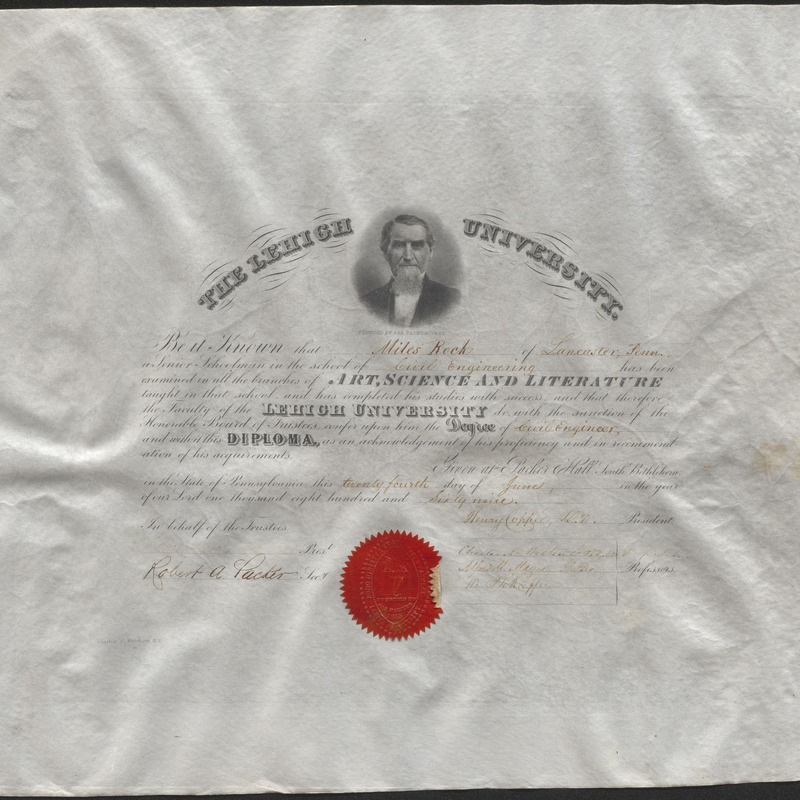
volunteer_activismSupport